Skip to content

Implant-retained dentures in Thailand

Rediscover the pleasure of chewing with a steadier denture.

Accept an invitation to lunch with excitement. Bite into something crunchy with confidence, and let the meal be about the company again.

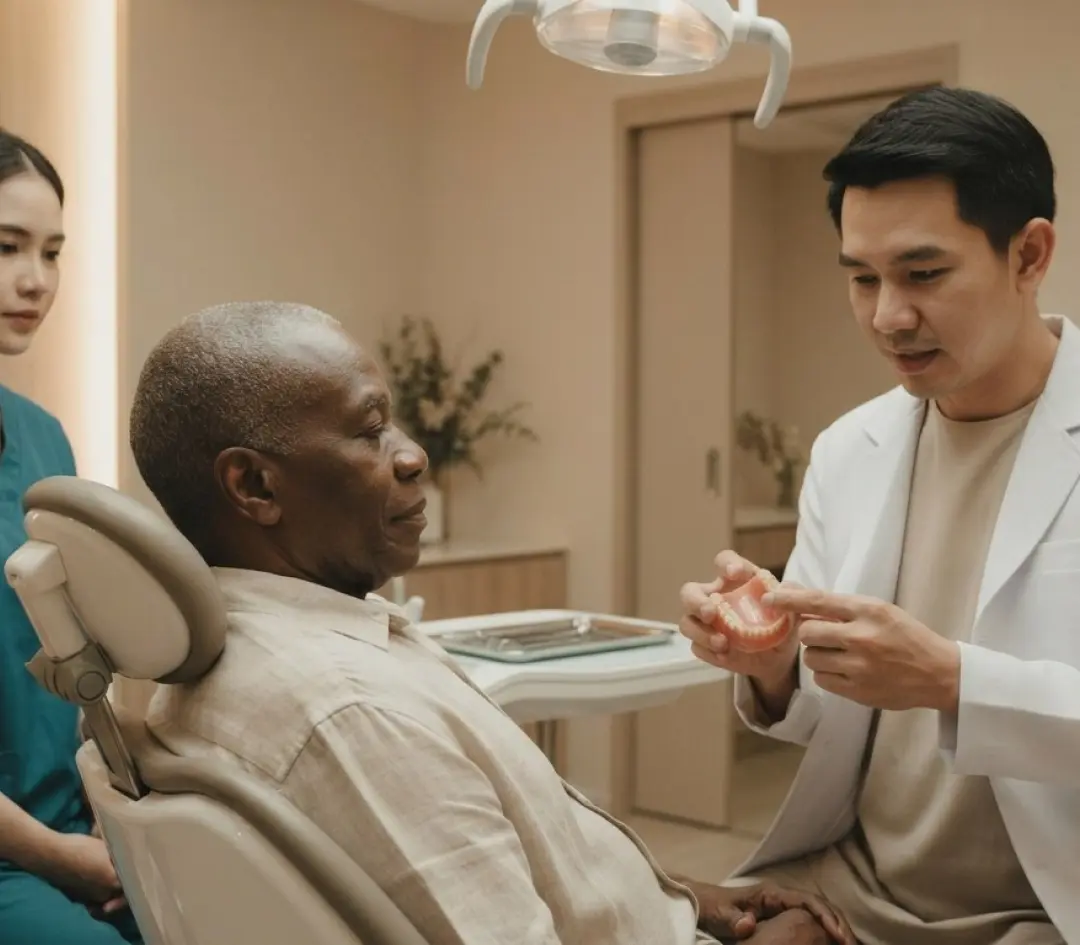
A dentist shows a denture to a patient seated in the dental chair

What implant-retained dentures are

Implant-retained dentures replace a full set of upper or lower teeth with a denture you can remove yourself.

Your denture works through these parts:

  • Implants: Small posts placed in your jaw act as anchors for the denture.

  • Attachments: Connectors hold the denture to individual implants or to a bar joining the implants.

  • Denture: Replacement teeth sit on a gum-colored base, which also rests on your gums for support.

You gain a steadier set of teeth for meals and conversation, with the attachments helping to limit movement.

With good daily care and regular dental reviews, your implants can last many years. The denture itself usually needs replacing after a while.

Our partners offer implant systems such as Straumann, SIC invent and Nobel Biocare. Your dentist confirms the implant and attachment choice in your plan.

How much it costs

In Thailand you can save 40 to 50 percent compared with prices at home, while our partners provide care of a comparable standard.

Denture prices are for one jaw on two implants, except the immediate denture, which is for one denture, upper or lower. The bone graft price is for one implant site, the sinus lift for one sinus.

About these prices

  • All prices are estimated, your doctor confirms your exact cost once they have examined you

  • Consultations, X-rays and scans are priced separately unless stated

  • Thai clinics add a small service or sterilization fee at each visit

What to expect

You will usually need two trips to Thailand, because the implants need time to bond with your jawbone before the denture is attached.

Your first trip

  1. Meet your dentist and agree on the plan. Your dentist examines your mouth and confirms the number and position of the implants for each jaw being treated.

  2. Have the implants placed. Your dentist places the implants in the planned positions and arranges a temporary denture if it is suitable during healing.

  3. Return for a surgical review. Your dentist checks the healing sites and removes any stitches that are ready to come out.

Your second trip

  1. Check the implants and record your mouth shape. Your dentist confirms that the implants are ready, then takes impressions to make your denture. Your denture is made between your visits on your trip. Some of our partner clinics have a dental laboratory of their own, which can shorten the time your denture takes to make. If speed matters to you, tell us before you book, since your clinic and treatment plan are set around it from the start.

  2. Try on your new teeth. You review the appearance of a trial denture, while your dentist checks how your teeth meet before the denture is finished.

  3. Have your denture fitted. Your dentist fits the denture to its attachments and shows you how to insert and remove it.

  4. Return for a fit check. Before your flight home, your dentist checks for pressure points and adjusts the bite if needed.

You have the surgical and denture-fitting stages coordinated through our partners, among Thailand's leading hospitals and dental clinics.

Why Thailand for dental care

Thailand is a leading destination for dental care, not only for implants and cosmetic dentistry.

  • In-house or partner dental labs, for quicker turnaround and tighter control over quality

  • Most dentists speak fluent English

  • Consultations typically include 3D scanning or digital impressions

Who it suits

You may benefit from implant-retained dentures if all your teeth are missing in one or both jaws, particularly if your current denture moves when you use it.

At your assessment, your dentist checks:

  • Bone: Your dentist checks whether there is enough bone to anchor the implants. At our partners, 3D jaw scans are available for detailed implant planning.

  • Mouth health: Your dentist checks any remaining teeth and treats active gum disease before implant surgery.

  • General health: Your dentist reviews conditions such as diabetes, smoking and medicines that affect healing, such as high-dose bone-strengthening drugs given for cancer that has spread to bone, before deciding whether surgery is suitable.

  • Everyday handling: Your dentist takes into account how easily you can remove, replace and clean the denture when choosing its attachments and your cleaning routine.

A conventional removable denture is an alternative your dentist can discuss with you.

Before your appointment

Plan your travel around both stages of treatment, leaving room for changes after the assessment.

  • Time in Thailand: Allow two to three weeks in Thailand for implant placement. Book flexible flights for both visits, since your dentist sets the length of the denture-fitting trip.

  • Medical history: Have your medical history, medicine list and allergies ready to discuss at the appointment. We gather the information the clinic needs beforehand.

  • Your treatment needs: Removing teeth or adding bone with a graft can extend treatment, so your dentist confirms whether you need preparation before implant placement. If you already wear a denture, bring it so your dentist can check whether it can be adapted.

  • Your budget: Allow for flights, accommodation and later maintenance as well as treatment. We give an estimate before travel, and your dentist confirms the exact price after examining you.

  • Consultation arrangements: At our partners, consultations are in English, so you can discuss treatment directly with your dentist. We book your appointment and send a reminder and a short brief before you attend.

Bring any questions about eating, appearance and maintenance to your consultation.

After your treatment

Your aftercare covers healing between trips, returning home and maintaining the denture over the years.

  • First days: Follow your dentist's instructions on food, cleaning and when to wear your temporary denture so it does not press on the healing sites.

  • Between trips: Allow two to six months between placement and the fitting trip. Keep any dental review appointments arranged for you at home.

  • Flying home: Your dentist checks your recovery after surgery and confirms when it is safe for you to fly.

  • Daily care: Remove your denture at night unless your dentist advises otherwise, and clean both the denture and attachments at least twice a day.

  • Ongoing maintenance: The small retaining parts inside the attachments can wear, so plan for replacements and fit adjustments at regular dental reviews.

  • Anything worrying you: You can contact your clinic, or us if we arranged treatment. We follow up after your visits and pass any concern to your treating dentist.

Keep the implant and attachment details with your dental information for future maintenance.

Your next step

Your denture gets help holding on, and you get our help with the treatment plan.

Get in touch about your dentures: as your free online concierge, we connect you with vetted partner hospitals and dental clinics and plan which dentists you see and when.

Thank you!

We have received your request and will contact you shortly. If you don't see an automated email in your inbox in the next few minutes, please make sure to also check your "Spam" folder.

We look forward to helping you getting the best medical care in Thailand!
Form submission failed, please check the following error(s):

Questions