Skip to content

Composite Bonding in Thailand

Erase minor chips to restore the natural shape of your teeth.

Have a chipped corner rebuilt in a single trip, shaped straight onto the tooth. Your dentist adds to the tooth rather than cutting it back, so usually little or no enamel comes off.

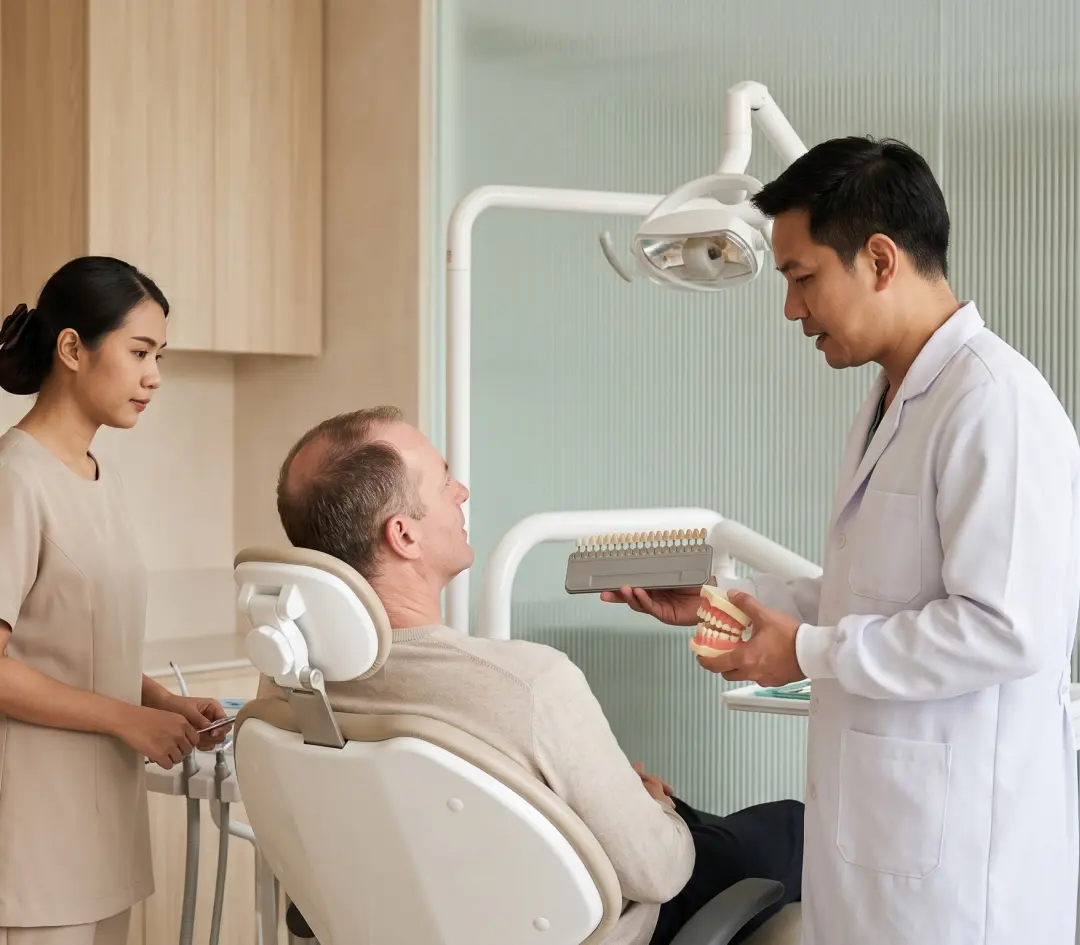
A dentist holds a shade guide beside a seated patient to compare tooth colour

What composite bonding is

Composite bonding changes the shape or color of your teeth by adding composite resin, a tooth-colored material that bonds to the tooth.

You can gain a more even smile, with changes made to the parts of your teeth that show when you talk or laugh. The treatment usually needs little or no removal of enamel, the hard outer surface of your tooth. Your dentist explains any preparation your teeth need before you agree to it.

With daily care, bonding typically lasts many years. Its lifespan depends on the size and position of the repair, your bite and how well you look after it.

In Thailand, dentists have access to internationally distributed composite resins for cosmetic dental work. Composite materials such as Filtek and Estelite are in use, and your dentist confirms the material for your teeth in your plan.

How much it costs

In Thailand you can save 50 to 80 percent compared with prices at home, while our partners provide care of a comparable standard.

Price for composite bonding is per one tooth.

About these prices

  • All prices are estimated, your doctor confirms your exact cost once they have examined you

  • Consultations, X-rays and scans are priced separately unless stated

  • Thai clinics add a small service or sterilization fee at each visit

What to expect

You usually need only one trip to Thailand for composite bonding because your dentist builds the result directly on your teeth, without waiting for a laboratory to make it.

  1. Agree on the changes. Your dentist examines your teeth and discusses the shape and color you want, then confirms which teeth to treat. You receive the exact price after this examination. Before then, we can give you an estimate.

  2. Prepare your teeth. Your dentist cleans and isolates the teeth to keep them dry, then prepares their surfaces and applies an adhesive so the composite can bond.

  3. Build the new shape. Your dentist adds and shapes the composite, using a dental light to harden it.

  4. Refine the finish. Your dentist polishes the composite and checks how your teeth meet, adjusting the shape where needed.

  5. Return for a review if needed. Before you leave Thailand, your dentist may check the result again and make small adjustments to the bite or finish.

English-language dental consultations are available in Thailand, so you can discuss the changes you want and understand the proposed treatment.

Why Thailand for dental care

Thailand is a leading destination for dental care, not only for implants and cosmetic dentistry.

  • In-house or partner dental labs, for quicker turnaround and tighter control over quality

  • Most dentists speak fluent English

  • Consultations typically include 3D scanning or digital impressions

Who it suits

Composite bonding may suit you if you want to repair small chips, close small gaps or change uneven tooth edges.

  • Tooth and gum health. Your dentist checks for decay and gum disease, which need attention before cosmetic bonding goes ahead.

  • Sound tooth structure. Your dentist checks how much healthy tooth remains and whether it can support the proposed addition.

  • Bite and tooth position. Your dentist checks whether the planned shape will fit the way your teeth meet; bonding changes their outline rather than moving them.

  • Clenching and grinding. These habits can damage composite, so your dentist checks for signs and decides whether you need a night guard, a protective cover worn over your teeth while you sleep.

  • The change you want. Your dentist assesses whether composite can achieve the color and proportions you have in mind without making your teeth too bulky.

Ceramic veneers, thin ceramic coverings attached to the front of your teeth, are another option your dentist may discuss after assessing you.

A fan of tooth shade tabs resting on a clinic worktop.

Before your appointment

Plan your stay around the work your teeth need, with time for assessment before you commit to treatment.

  • Choose your care. Dentistry in Thailand is regulated by the Dental Council of Thailand, with dentists required to hold a license to practice. Our partners are among Thailand's leading hospitals and dental clinics, giving you access to established dental teams for your assessment and treatment.

  • Allow enough time. Plan for the days your treatment plan sets out, with some spare time for a check before you fly home, keeping your itinerary flexible until the dentist confirms your schedule. Tell us your travel dates and whether you have an event you want treatment completed for.

  • Prepare your history. Have details of your medicines, allergies, medical conditions and previous dental treatment ready for the clinic. We gather what the clinic needs, book your appointment and send you a reminder and a short brief beforehand.

  • Mention whitening plans. Whitening does not lighten composite, so tell your dentist if you want a lighter shade before bonding is planned.

  • Budget for your visit. Include flights, accommodation, routine upkeep and any additional dental work identified at assessment. If you have dental insurance, check whether your policy covers the treatment abroad; our online concierge help costs you nothing extra.

Keep your preferences clear: explain what you want to change and what you like about your smile already.

After your treatment

You can usually return to everyday activities after bonding, while protecting the new edges and keeping up your dental care.

  • Your first meals. The composite is already hardened when you leave the chair; follow your dentist's eating advice, including waiting for any numbness to wear off.

  • Going home. Complete any review your dentist has requested before your departure and keep the clinic's contact details with your travel information.

  • Daily cleaning. Brush with fluoride toothpaste and clean between your teeth to help keep the teeth and gums around the bonding healthy.

  • Protecting the edges. Avoid biting your nails, chewing pens and using your teeth to open packaging, as these habits can chip the composite.

  • Keeping the finish. Composite can stain over time, so keep regular dental appointments at home for assessment and polishing where appropriate.

  • A chip or rough area. Composite can often be repaired locally without replacing the whole restoration; have a dentist assess the damage before deciding what work is needed. We follow up after treatment and pass any concern to your treating dentist.

Contact your clinic about anything that worries you, or contact us if we arranged your treatment.

Your next step

Enjoy the look of a whole tooth again, with our help to find a dentist for that repair.

Tell us what you would like to change about your teeth, and we will connect you with our vetted partners and plan with you which dentists to see and when.

Thank you!

We have received your request and will contact you shortly. If you don't see an automated email in your inbox in the next few minutes, please make sure to also check your "Spam" folder.

We look forward to helping you getting the best medical care in Thailand!
Form submission failed, please check the following error(s):

Questions